The Shop
Some might wonder why we chose to highlight brick-and-mortar shops amid our new normal. Since the onset of the pandemic, we’ve experienced firsthand the wonderful world of e-commerce. However, our restricted lifestyles have also helped us realize what kind of person we are, and subsequently, what gives us strength to keep going. For example, some people get energy from the ambience of a restaurant or its bustling environment more than the food. And some people enjoy the process of discovering new things in a brick-and-mortar shop more than the actual products. It doesn’t matter how great e-commerce services or algorithms get—these experiences will be forever nonpareil.
The diverse shops we are featuring here in The Shop were selected for their emphasis on precisely this kind of experience. We hope to answer the question of “Why do we need physical stores in this age?” with unique and compelling reasons from each shop that we introduce. Interestingly, the shops we highlighted in cities like London, Tokyo, Berlin, and Seoul share a common preoccupation with their spaces and how to fill them. These shops focus on how to cultivate both the owner-to-customer and customer-to-customer relationships, how to accept the anxiety of these times with grace and adaptability, and how to utilize space as a medium for sensory experiences. Such examples are spread across the globe: Mo-no-ha, a Seoul-based commercial space in search of Korea’s traditional aesthetics; Muachi, an introduction to moon jars and vintage furniture from around the world, along with many daily items; Blue Mountain School, a London-based fashion select shop also operating a restaurant and gallery; and Liberia, a bookstore that categorize books by unique keywords such as time and space, utopia, and identity. Many brick-and-mortar shops deliberately choose the neighborhoods where they will set up and establish their identities there. To say that these shops become the creative forerunners of any industry doesn’t seem far off the mark.
While shops featured in The Shop differ in sizes and industries, they work in the same way that they continue to verify the values they pursue and transfer their business roadmap in the physical space. The book describes how Freitag, Aesop, and Muji have demonstrated their philosophies and future strategies through physical spaces. Gildas Loaëc, founder of Maison Kitsune, and Alasdair Fenning, head of retail for Rapha Asia-Pacific at Rapha, share their ideas and thoughts through interviews with The Shop.
Product Information
Product Information
Shipping & Returns
Shipping & Returns
The Shop
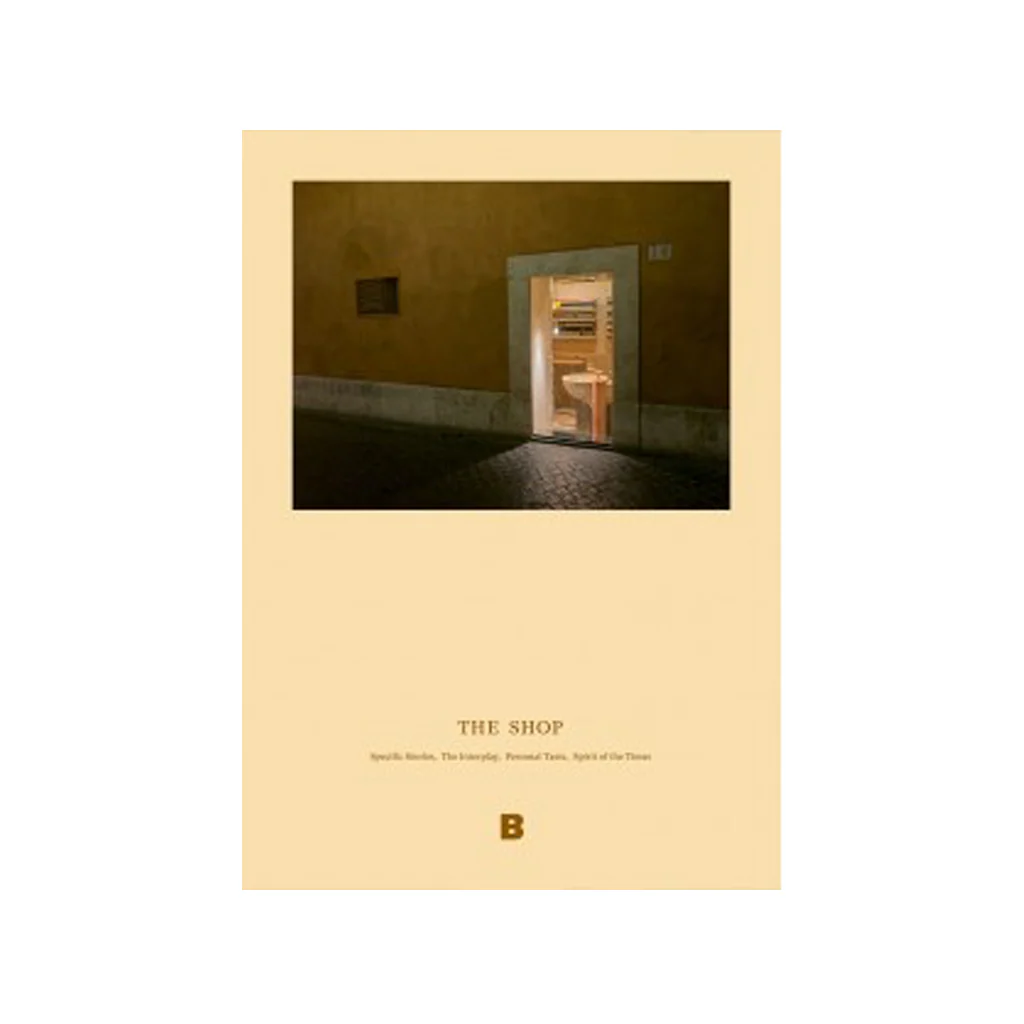
The Shop
Some might wonder why we chose to highlight brick-and-mortar shops amid our new normal. Since the onset of the pandemic, we’ve experienced firsthand the wonderful world of e-commerce. However, our restricted lifestyles have also helped us realize what kind of person we are, and subsequently, what gives us strength to keep going. For example, some people get energy from the ambience of a restaurant or its bustling environment more than the food. And some people enjoy the process of discovering new things in a brick-and-mortar shop more than the actual products. It doesn’t matter how great e-commerce services or algorithms get—these experiences will be forever nonpareil.
The diverse shops we are featuring here in The Shop were selected for their emphasis on precisely this kind of experience. We hope to answer the question of “Why do we need physical stores in this age?” with unique and compelling reasons from each shop that we introduce. Interestingly, the shops we highlighted in cities like London, Tokyo, Berlin, and Seoul share a common preoccupation with their spaces and how to fill them. These shops focus on how to cultivate both the owner-to-customer and customer-to-customer relationships, how to accept the anxiety of these times with grace and adaptability, and how to utilize space as a medium for sensory experiences. Such examples are spread across the globe: Mo-no-ha, a Seoul-based commercial space in search of Korea’s traditional aesthetics; Muachi, an introduction to moon jars and vintage furniture from around the world, along with many daily items; Blue Mountain School, a London-based fashion select shop also operating a restaurant and gallery; and Liberia, a bookstore that categorize books by unique keywords such as time and space, utopia, and identity. Many brick-and-mortar shops deliberately choose the neighborhoods where they will set up and establish their identities there. To say that these shops become the creative forerunners of any industry doesn’t seem far off the mark.
While shops featured in The Shop differ in sizes and industries, they work in the same way that they continue to verify the values they pursue and transfer their business roadmap in the physical space. The book describes how Freitag, Aesop, and Muji have demonstrated their philosophies and future strategies through physical spaces. Gildas Loaëc, founder of Maison Kitsune, and Alasdair Fenning, head of retail for Rapha Asia-Pacific at Rapha, share their ideas and thoughts through interviews with The Shop.
Original: $35.00
-65%$35.00
$12.25Product Information
Product Information
Shipping & Returns
Shipping & Returns
Description
Some might wonder why we chose to highlight brick-and-mortar shops amid our new normal. Since the onset of the pandemic, we’ve experienced firsthand the wonderful world of e-commerce. However, our restricted lifestyles have also helped us realize what kind of person we are, and subsequently, what gives us strength to keep going. For example, some people get energy from the ambience of a restaurant or its bustling environment more than the food. And some people enjoy the process of discovering new things in a brick-and-mortar shop more than the actual products. It doesn’t matter how great e-commerce services or algorithms get—these experiences will be forever nonpareil.
The diverse shops we are featuring here in The Shop were selected for their emphasis on precisely this kind of experience. We hope to answer the question of “Why do we need physical stores in this age?” with unique and compelling reasons from each shop that we introduce. Interestingly, the shops we highlighted in cities like London, Tokyo, Berlin, and Seoul share a common preoccupation with their spaces and how to fill them. These shops focus on how to cultivate both the owner-to-customer and customer-to-customer relationships, how to accept the anxiety of these times with grace and adaptability, and how to utilize space as a medium for sensory experiences. Such examples are spread across the globe: Mo-no-ha, a Seoul-based commercial space in search of Korea’s traditional aesthetics; Muachi, an introduction to moon jars and vintage furniture from around the world, along with many daily items; Blue Mountain School, a London-based fashion select shop also operating a restaurant and gallery; and Liberia, a bookstore that categorize books by unique keywords such as time and space, utopia, and identity. Many brick-and-mortar shops deliberately choose the neighborhoods where they will set up and establish their identities there. To say that these shops become the creative forerunners of any industry doesn’t seem far off the mark.
While shops featured in The Shop differ in sizes and industries, they work in the same way that they continue to verify the values they pursue and transfer their business roadmap in the physical space. The book describes how Freitag, Aesop, and Muji have demonstrated their philosophies and future strategies through physical spaces. Gildas Loaëc, founder of Maison Kitsune, and Alasdair Fenning, head of retail for Rapha Asia-Pacific at Rapha, share their ideas and thoughts through interviews with The Shop.